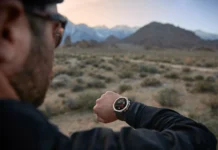



CES 2026, taking place in Las Vegas from January 6-9, is the world’s largest annual consumer technology event, where global brands unveil their latest innovations, including the Amazfit Active Max.
Follow all of our CES 2026 news here.

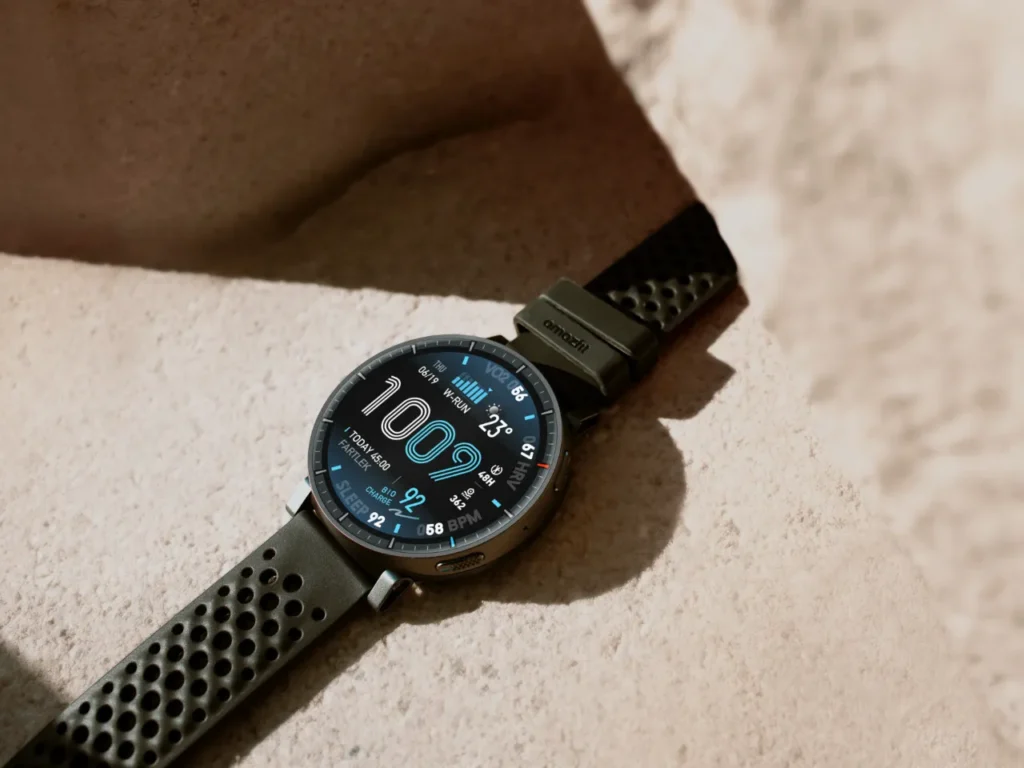
Amazfit Active Max
Amazfit Active Max is a fitness-focused smartwatch built around automated training features, offline maps, and on-wrist recovery tracking.
It targets runners, gym training, and HYROX-style prep, with workout details and longer-term trends shown on the watch and in the Zepp App.
And if you are unfamiliar with Amazfit smartwatches, they are among the best-performing for battery life on the market, easily eclipsing 20+ days between charges, and boast one of the best user interfaces on any wearable.
- 1.5-inch AMOLED display with 480 x 480, up to 3000 nits.
- Lightweight build at 39.5 g (without strap), aluminium alloy frame with polymer case and two buttons.
- 24H monitoring for heart rate, blood-oxygen saturation, stress, and skin temperature, plus sleep stages and sleep HRV.
- Sports support includes 160+ sports modes, smart recognition for 25 strength training movements and 8 sports movements.
- Built-in mic and speaker, 5 satellite positioning systems, 5 ATM water resistance, plus 4 GB storage for offline podcasts and music.
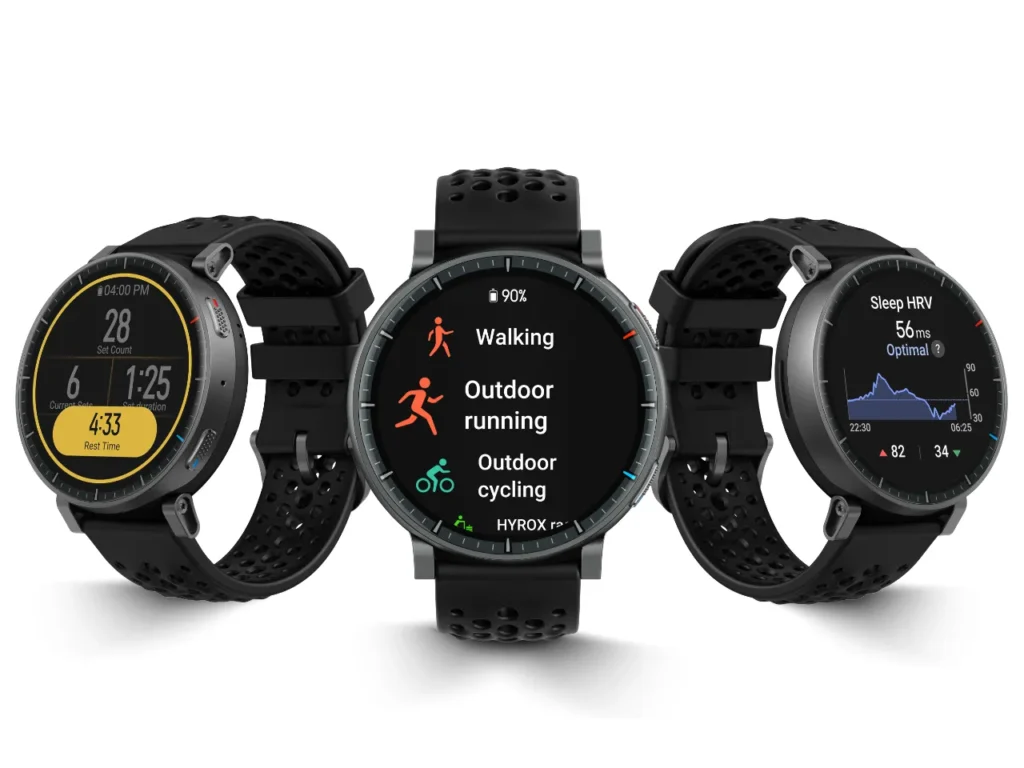
The headline hardware is a 1.5-inch AMOLED display with a peak brightness of up to 3,000 nits. Brightness can be adjusted automatically based on the environment, and the glass has been strengthened with an anti-fingerprint coating.
On the aluminium alloy frame, you get two buttons, a rotor motor, plus a built-in microphone and speaker. Water resistance is rated at 5 ATM, and a 22 mm silicone strap is completed with a classic pin buckle. All weighing in just over 40g.
On the training side, Amazfit says the Amazfit Active Max tracks over 160 sports and activities, including smart recognition for 25 strength-training movements and 8 sports movements, and offers tools to build training templates through the Zepp App, plus interval training on the watch.
For running, it includes Track Run mode, smart trajectory correction, a virtual pacer, and positioning via five satellite systems.
Amazfit Active Max offers personalised AI-powered training plans and advanced analytics to show fitness progress. Zepp Coach provides training summaries and recovery insights, delivering them to the watch and the Zepp App.
Amazfit says the watch can automatically set heart rate zones when the maximum heart rate is detected, and it can warn you if your heart rate is too high. It also claims automatic exercise start and pause, plus route creation for running or hiking.
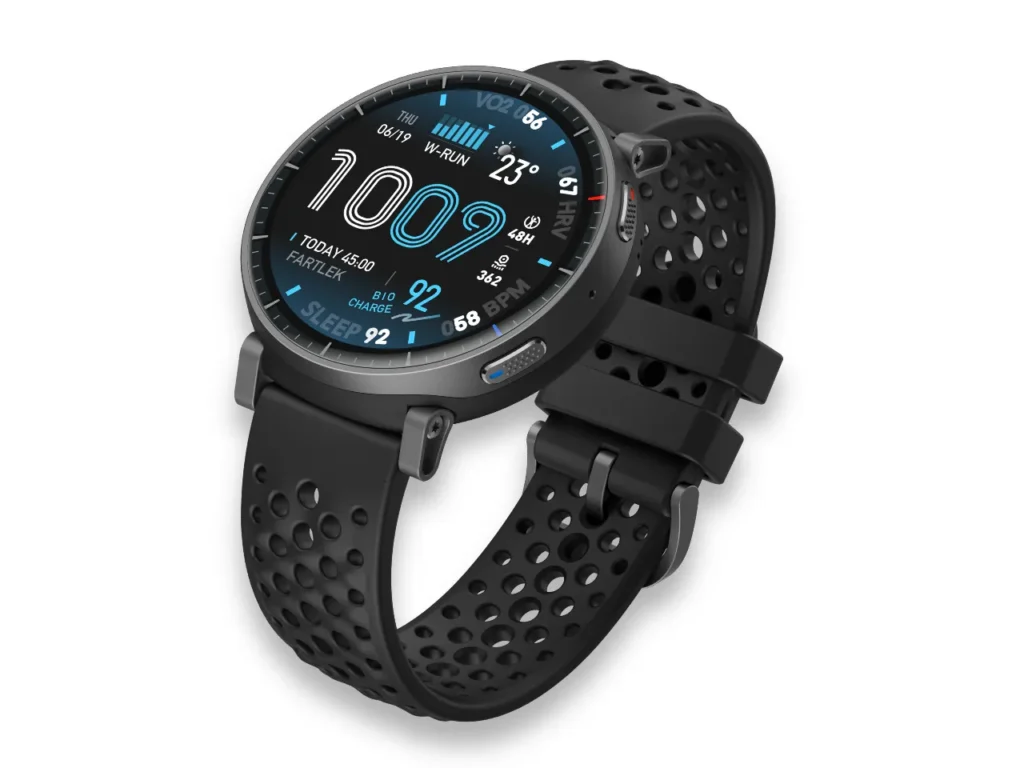
Health and recovery tracking leans on the BioTracker PPG biometric sensor (5PD + 2LED), with 24-hour monitoring for heart rate, blood-oxygen saturation, stress level, and skin temperature via an onboard thermometer. Manual checks are supported for heart rate, blood oxygen, and stress, and a one-tap measurement option.
Sleep tracking includes stages of REM sleep, sleep heart rate variability, daytime naps, sleep schedule, sleep breathing quality, and a sleep score. Recovery and readiness are framed through the Zepp App, which shows accumulated training load and recovery progress, including sleep quality and heart rate variability, alongside the BioCharge indicator, which reflects the current energy level.
For training data beyond the wrist, Amazfit Active Max supports connections to peripheral workout devices, including a heart rate belt, running power meter, cycling power meter, cycling speedometer, and cycling cadence meter.
It also supports sync to third-party fitness apps, including Strava, adidas Running, TrainingPeaks, komoot, Relive, Google Fit, and Apple Health, so your data can be shared outside the Zepp App.
Navigation is not left out, with the watch supporting thousands of offline maps, including topographic, ski resort, and contour maps, as well as navigation features.
Media and apps get a boost with 4 GB of onboard storage for your favourite podcasts and music, even without an internet connection. Users can download and install hundreds of mini-apps from the Zepp App, including a Podcast mini-app that Amazfit claims provides access to millions of free audio contents.
It can also pair with headphones such as Amazfit UP and supports pairing with Amazfit sports accessories like Helio Strap and Helio Ring, as well as third-party devices.
Amazfit Active Max will be available from 30 December 2025 at amazfit.com and through selected Amazfit partners for $169/£169.

Frequently Asked Questions — CES 2026
CES 2026 is projected for 6–9 January 2026, with media days on 4–5 January for major press briefings.
The show will run across the Las Vegas Convention Center, the Venetian Expo, and selected venues on the Strip.
CES 2026 is a trade-only event requiring verified industry credentials, such as employer proof or recognised media status.
Registration is expected to open in mid-2025 following the CTA’s established annual cycle.
Yes. AI is a core theme for CES 2026, with expanded exhibition zones covering generative AI, robotics, and real-world applications.
Keynotes are expected to address AI governance, sustainability, mobility innovation, and global technology standards.
No. CES 2026 is not open to the general public and requires approved trade registration.
Yes. Eureka Park will again showcase global start-ups in AI, mobility, robotics, health tech, and climate innovation.
Arriving on 4 January is recommended for media events. Hotels near monorail stations provide the quickest venue access.
Attendance is anticipated to match recent years, likely between 115,000 and 130,000 participants.
Yes. EVs, charging solutions, and software-defined vehicle platforms will again dominate West Hall.
Expect long walking distances, multiple venues, and busy sessions. Planning routes and carrying a power bank are essential.